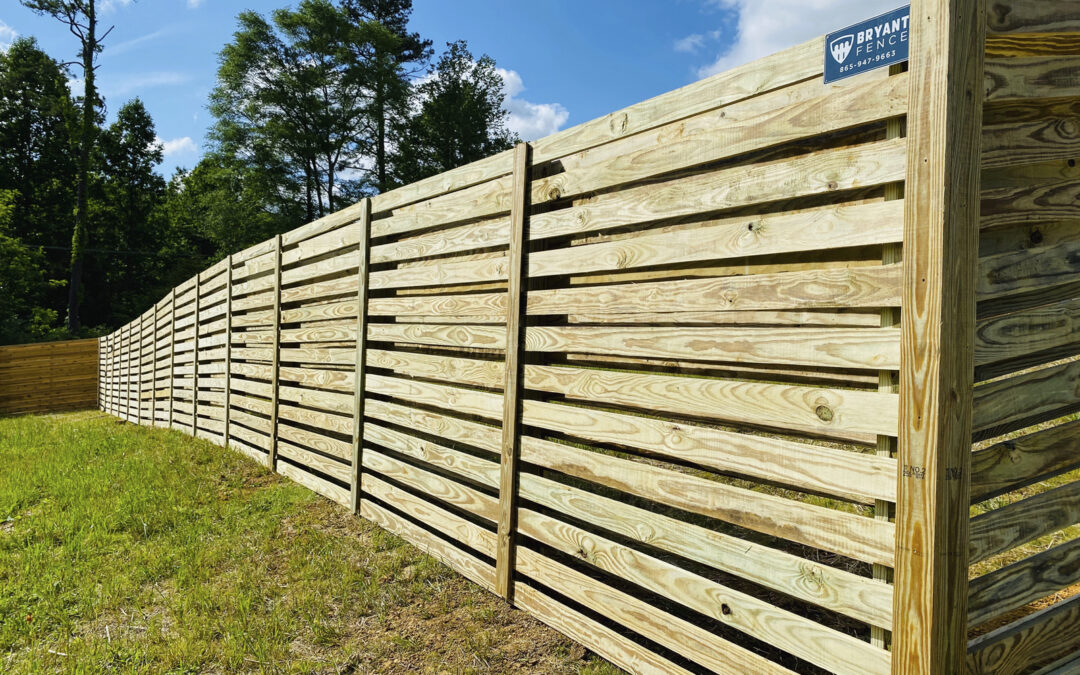
After more than 45 years of building fences in East Tennessee, we hear the same wood fence myths every week. Some of them cost homeowners a lot of money. Here are the six we run into most, and the truth behind each one.
Myth 1: You Can Use Landscape Timbers as Fence Posts
Landscape timbers look a lot like fence posts and cost about a quarter of the price, so it's tempting. But they are the lowest grade of treated pine, and they should never be used as fence posts.
Think of a tree like a cut of meat. Different parts have different qualities. The best wood goes to structural lumber for building homes, then to smaller pieces like 2x4s, then to fence boards. Landscape timbers come from what's left over. That wood is usually the densest part of the tree, and it doesn't soak up the insecticide well during treatment.
So even though landscape timbers go through the treatment tank, they carry no guarantee against insects or rot. Set in the ground in East Tennessee, they're an easy meal for termites. A fence is only as strong as its posts, so we always use posts that are rated for ground contact.
Myth 2: Termites Aren't a Problem Around Here
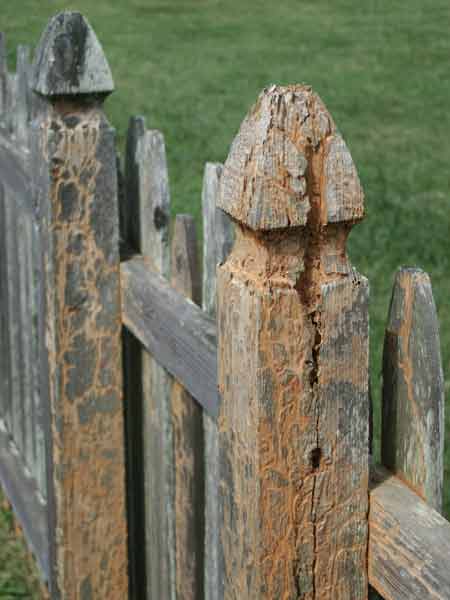
If you live in the termite belt, you need to know this one. The termite belt covers western North Carolina, Tennessee, northern Georgia, northern Alabama and Mississippi. Our mild climate and moist ground create ideal conditions for subterranean termites and wood-rotting fungus, the number one problem for wood fences in the South.
A subterranean termite colony can grow to 1 to 2 million termites before it splits into new colonies. As nature's clean-up crew, they eat wood fiber 24 hours a day, and most of the damage happens underground where you can't see it. Protecting your fence posts matters, and not just for the fence: a termite-infested fence close to the house is an open invitation to your home.
Myth 3: Cedar Doesn't Warp
All wood warps. Wood is made of cells that aren't all the same size, and those cells are full of water. As the sun dries the lumber, the cells shrink unevenly and the board moves.
Some lumber, like slow-growing, old-growth Western Red Cedar, has a more even cell structure, so it dries more evenly and moves less. But every wood fence will warp and shrink to some degree. That's natural, not a defect.
Myth 4: The Treated Pine Warranty Covers Warping
Pressure-treated Southern yellow pine is a natural wood product, and the wood itself carries no warranty against warping, twisting or shrinking. What the chemical manufacturer does warrant is the lumber's structural integrity against termites and rot fungus. Termites or mold may get a start on treated lumber, but the treatment stops the damage before it becomes structural. Read our post on termites and treated pine for more.
Myth 5: Cedar Is Cedar Is Cedar
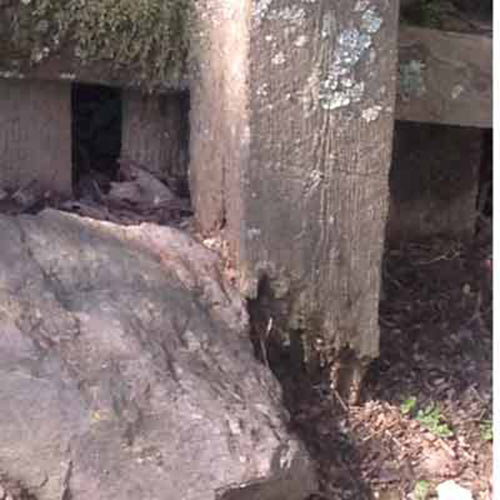
Not all cedar is the same. Old-growth Western Red Cedar from the Pacific Northwest has a lot of natural oils that resist insects. Many lower-cost "cedars" share little more than the name. These include eastern red cedar, white cedar, Atlantic cedar and swamp cedar, along with cypress, fir and spruce. They come from smaller, fast-growing trees with far less of that natural protection, and more of the softer outer wood that rots sooner.
You also can't simply treat these woods to fix the problem. Their cell structure doesn't accept and hold insecticide well, so inside the termite belt, untreated cedar and cypress posts will eventually get termite damage. If you're buying a Western Red Cedar fence, make sure your contract spells out 100% Western Red Cedar lumber, and set the boards on treated pine posts. Our cedar vs. pine guide compares the options side by side.
Myth 6: Cracks in My Fence Posts Mean They're Failing
This one worries a lot of homeowners, but it's not true. Every post and timber 4x4 and larger will show cracks on the surface as it ages. The outside of the post dries faster than the inside, and that stress opens small relief cracks, called checks. They're natural and they don't weaken the post. Look at any older deck or fence and you'll see the same thing.
The Bottom Line
- Never use landscape timbers as fence posts.
- In East Tennessee, set every wood fence on posts treated for ground contact.
- All wood moves as it dries. Some movement isn't a defect.
- If you choose cedar, know which cedar you're getting and put it on treated pine posts.
- Surface cracks in posts are normal.
Planning a wood fence? See our wood fence installation page or request a free quote. Call Bryant Fence at (865) 947-9663.